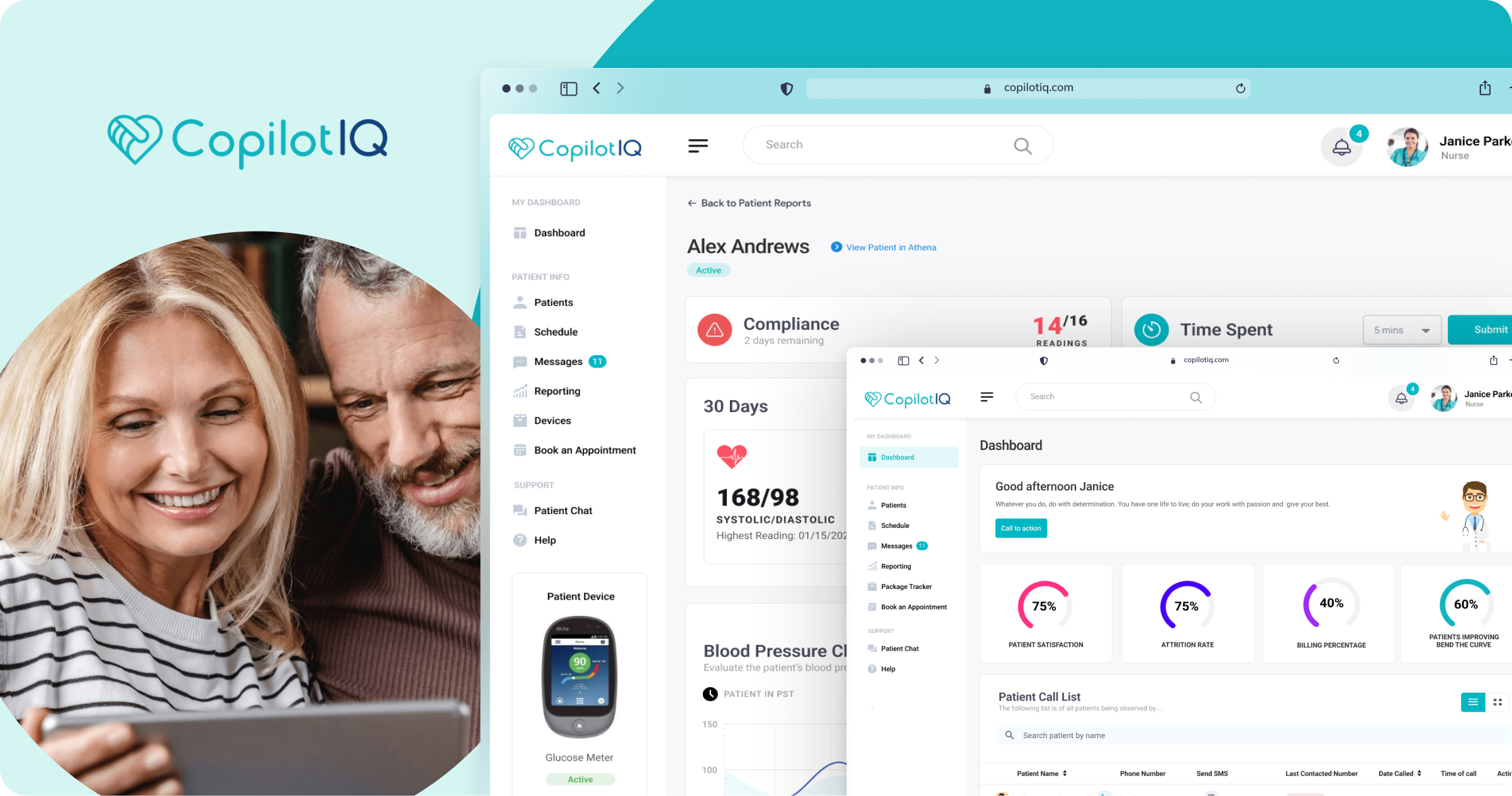
Diabetes and heart disease are some of the most common life‑changing conditions in North America. While lifestyle changes are recommended, adherence is inconsistent without ongoing support.
Conventional care typically relies on a single annual blood pressure and glucose measurement. That limited data guides medication decisions and dosage changes, leaving physicians without the visibility they need to support patients effectively.
Without continuous monitoring, patients risk being incorrectly prescribed and providers lack the data support required to make timely, accurate decisions. CopilotIQ was created to fill that gap with frequent, direct-to-patient care and ongoing monitoring.
I led UX research, user journeys, visual design, prototyping, and product strategy to shape the CopilotIQ web platform, aligning stakeholders and clinical teams around patient-first workflows.
The goal for the web platform is to leverage continuous monitoring and data analytics to offer a more nuanced understanding of each patient's health. This insight enables better clinical decisions, dosage adjustments, and lifestyle recommendations.
Most care models rely on infrequent measurements and fragmented records. CopilotIQ differentiates by connecting continuous monitoring with nurse-led support to reduce gaps in care.
To begin, I wanted to get a sense of how elderly patients were doing with monitoring their health with traditional methods and what frustrations they faced.
Objectives of the studies
I conducted several rounds of moderated interviews and surveys with internal stakeholders, customer representative leadership and current customers to identify pain points and usability gaps.
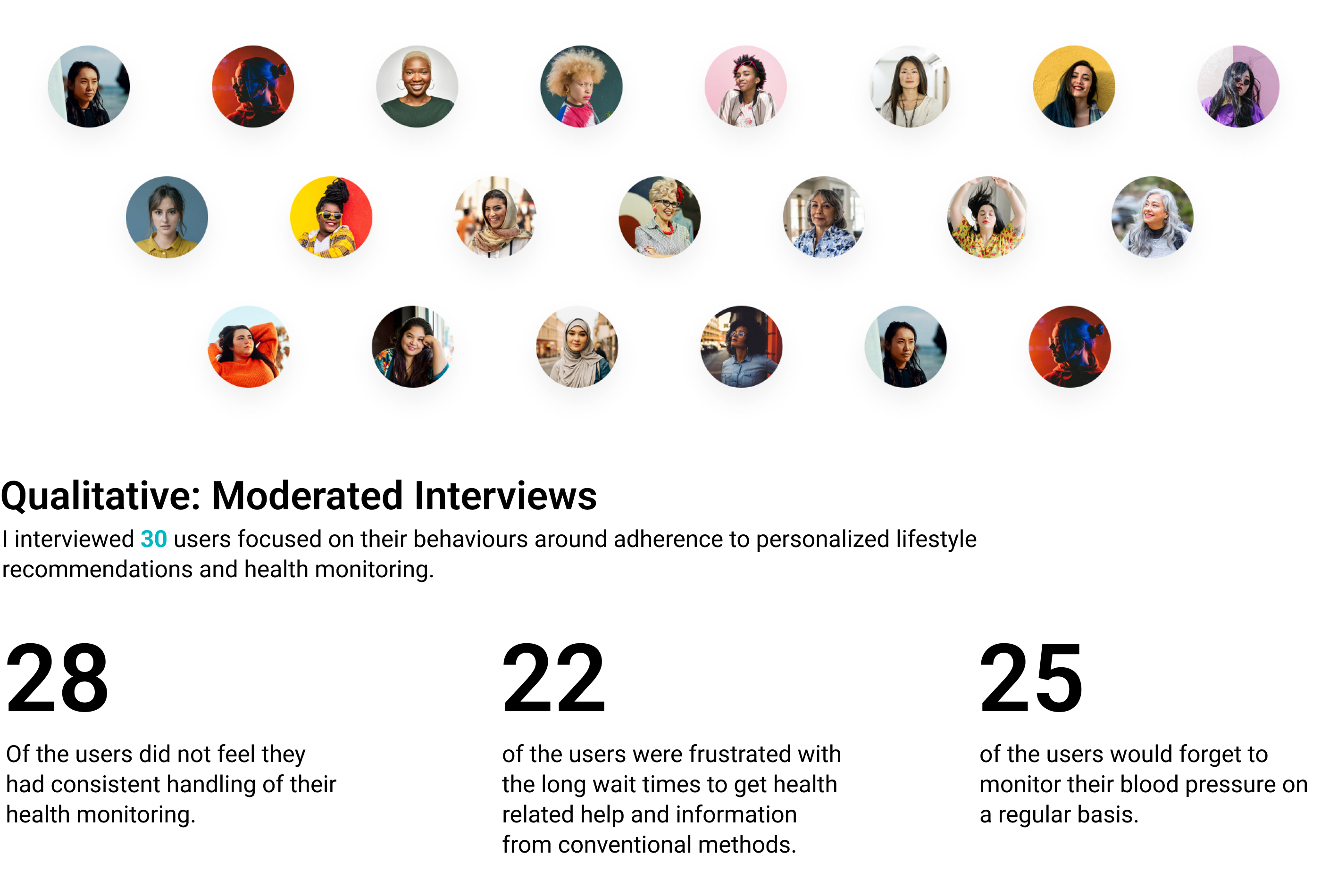
Most Americans over 65 have difficulty staying on track with strict health plans that require daily input. CopilotIQ connects data to a patient nurse’s fingertips so support gets personal and treatments get impactful.
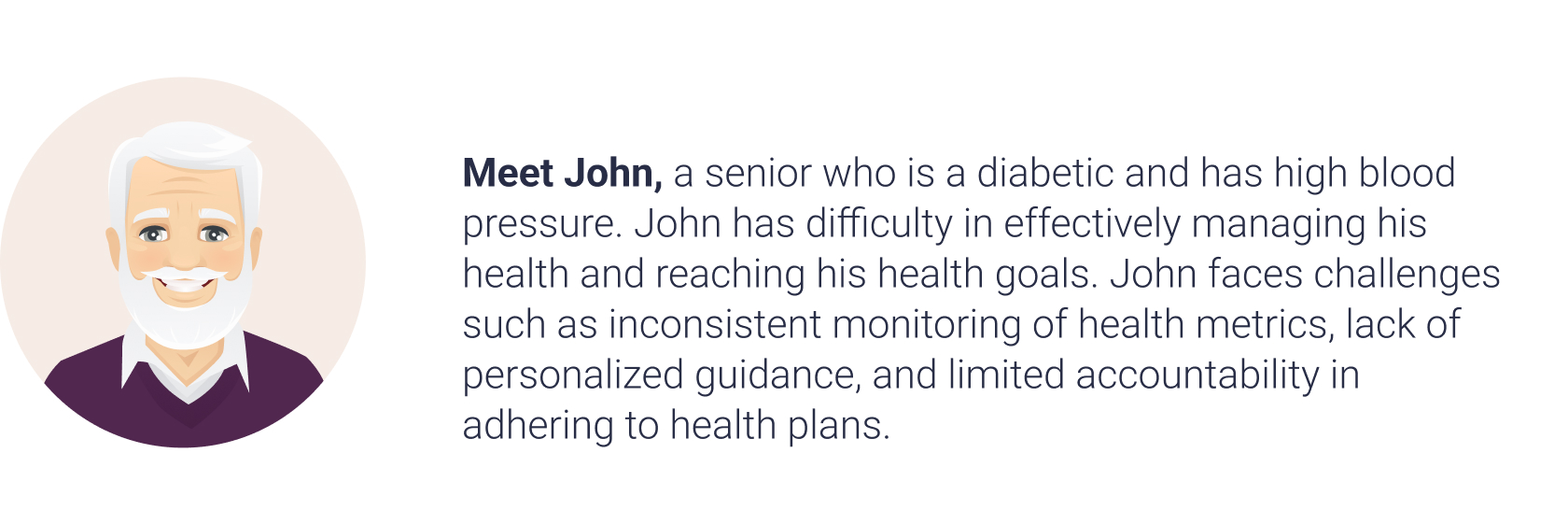
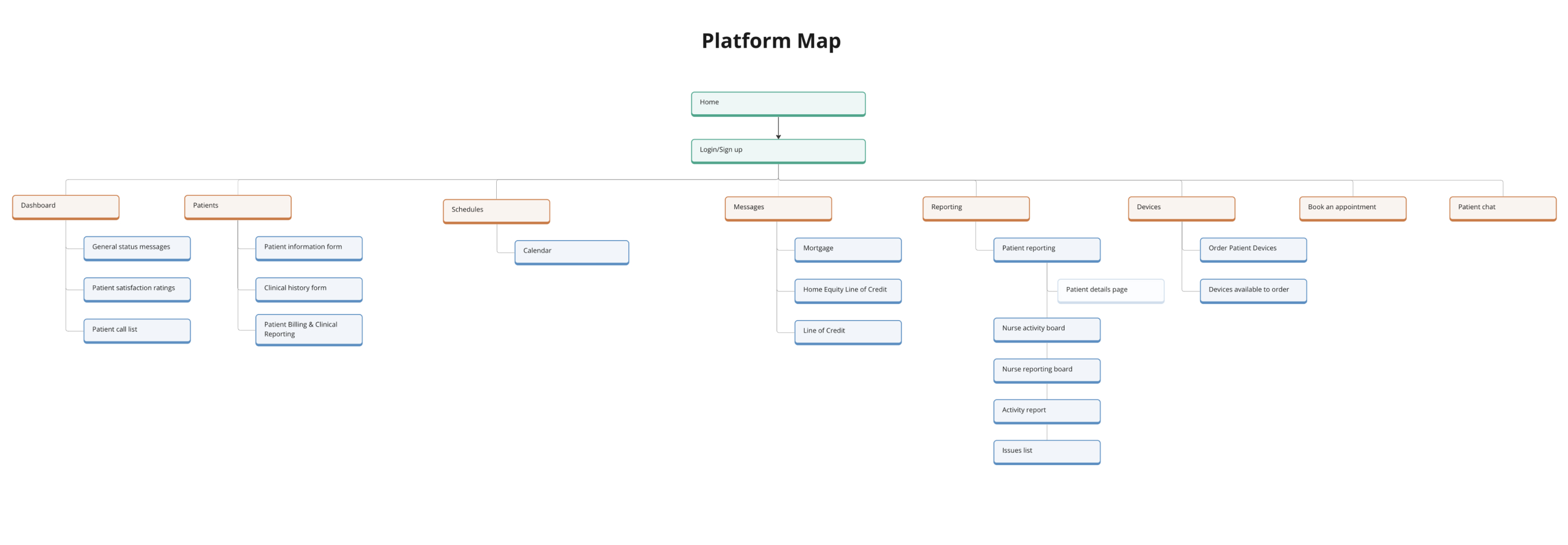
CopilotIQ's user experience was conceived from the ground up, backed by extensive research and strong user empathy. Collaborative sessions shaped personas and journey maps, resulting in features that addressed user problems while aligning with business goals.
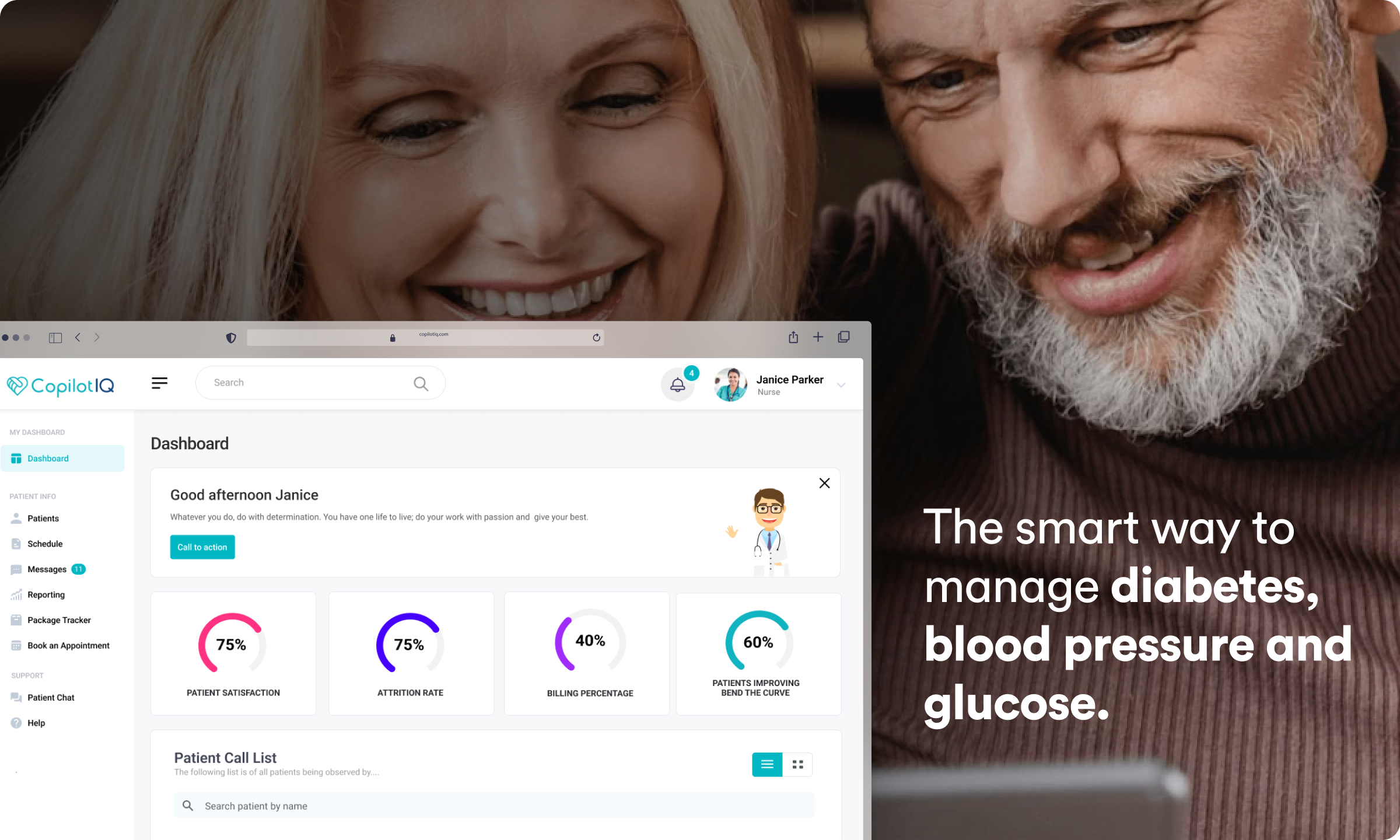
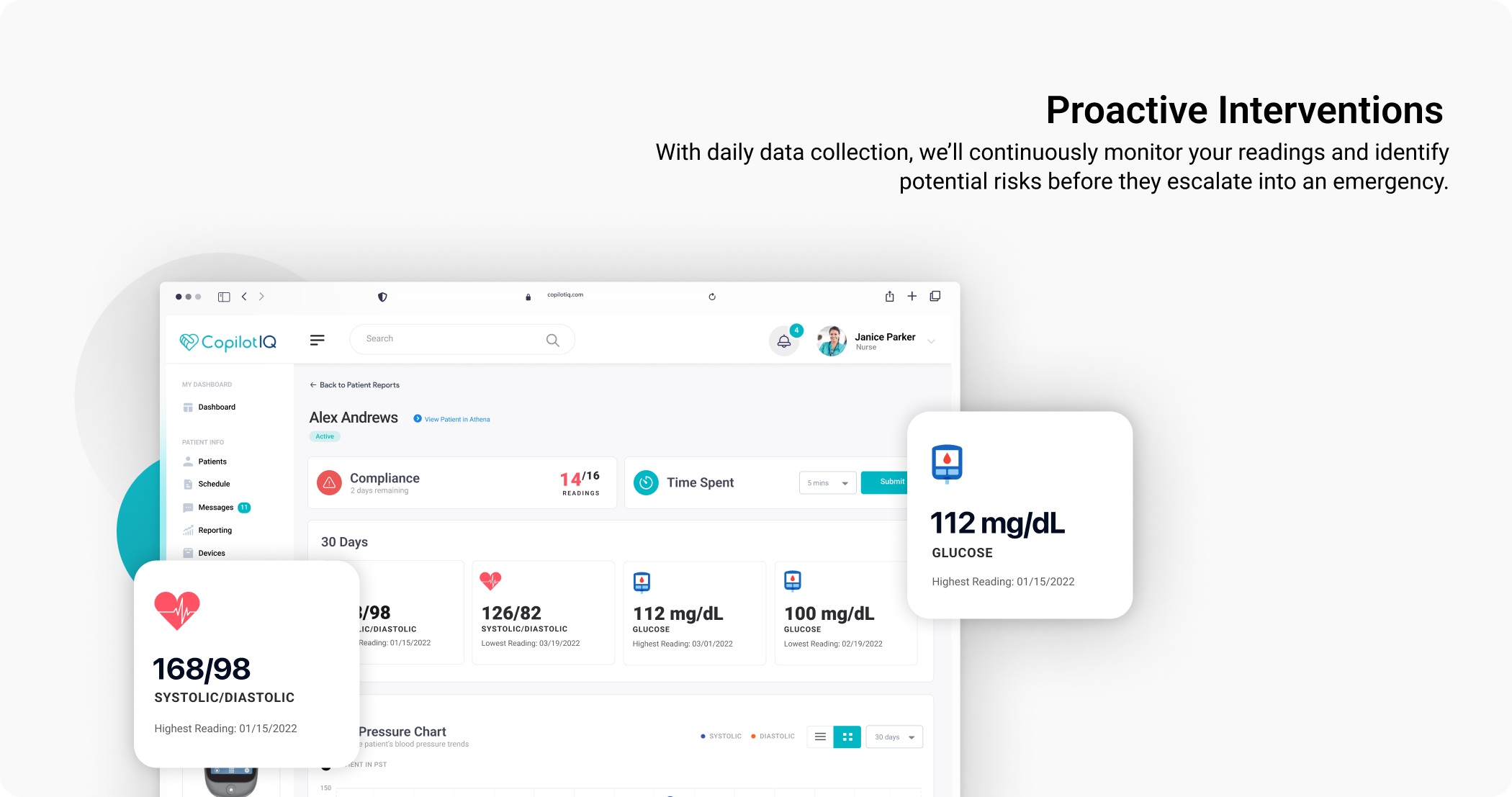
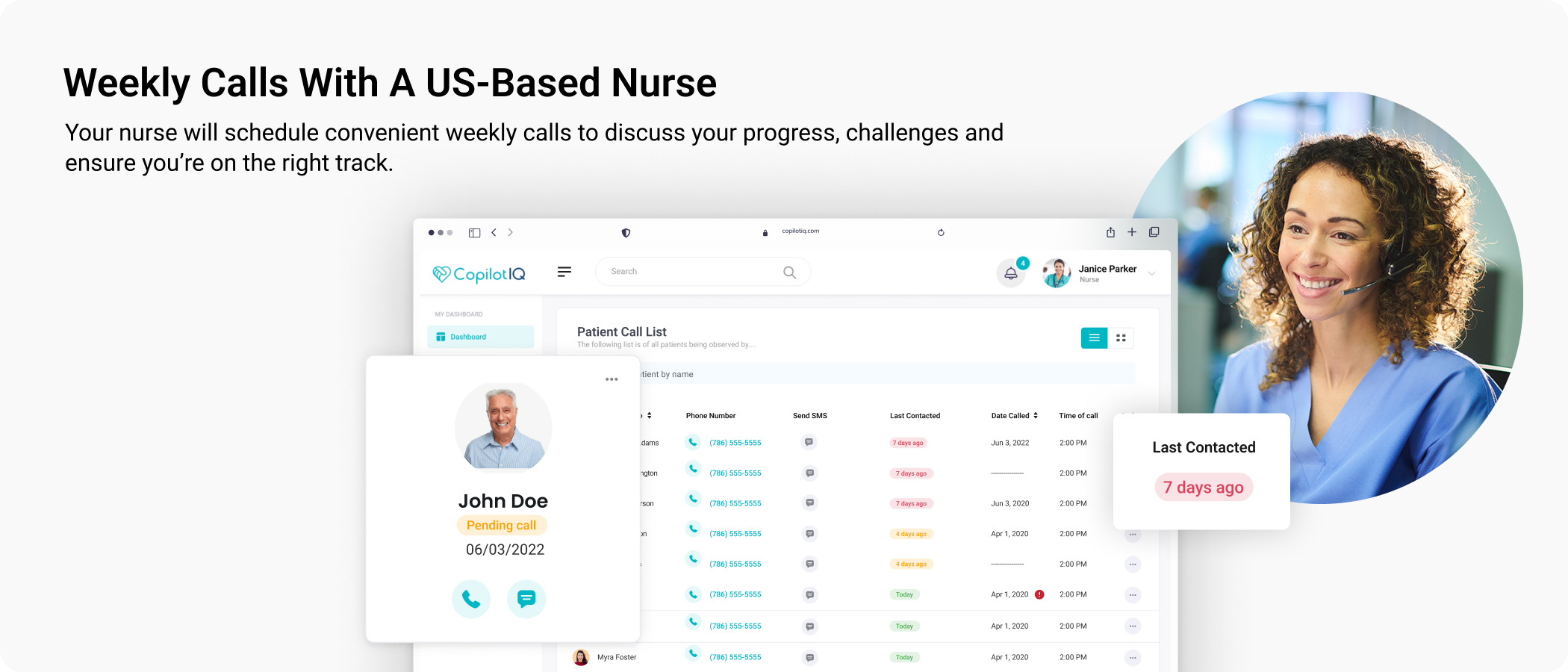
We did not auto‑apply recommendations. We chose user control over automation (automation vs user control).
We pushed back on opaque scoring models, prioritizing transparency over black‑box accuracy (clarity vs complexity).
We accepted fewer automated actions, choosing auditability over speed (speed vs correctness).
We defined a shared “confidence + evidence” pattern. We traded team autonomy for platform reuse to standardize AI UX (platform reuse vs team autonomy).
CopilotIQ enabled more frequent patient monitoring and clearer clinical decision-making through continuous data collection and nurse‑led support.
Frequent monitoring paired with human support increased adherence and improved confidence in care. Clear data visibility and progressive guidance were essential to helping patients stay on track.